
What is Seed Cycling? A Beginner's Guide to Cycle-Based Nutrition
Seed cycling is one of those terms that gets thrown around a lot. Here's what it actually means.
The Basics
Seed cycling is a food-first practice that involves eating specific seeds during each phase of your menstrual cycle to support your body's natural hormonal rhythm. What’s great about seed-cycling is that it isn’t a quick fix or another supplement protocol. It's a simple, consistent nutritional habit. One that works with your body's existing intelligence rather than overriding it.
Centrd was created on the basis of seed cycling, not because it's a trend, but because it's one of the most accessible, low-barrier ways to begin nourishing your cycle intentionally.
Understanding your cycle
Before seed cycling makes sense, it helps to understand the two primary phases of your menstrual cycle.
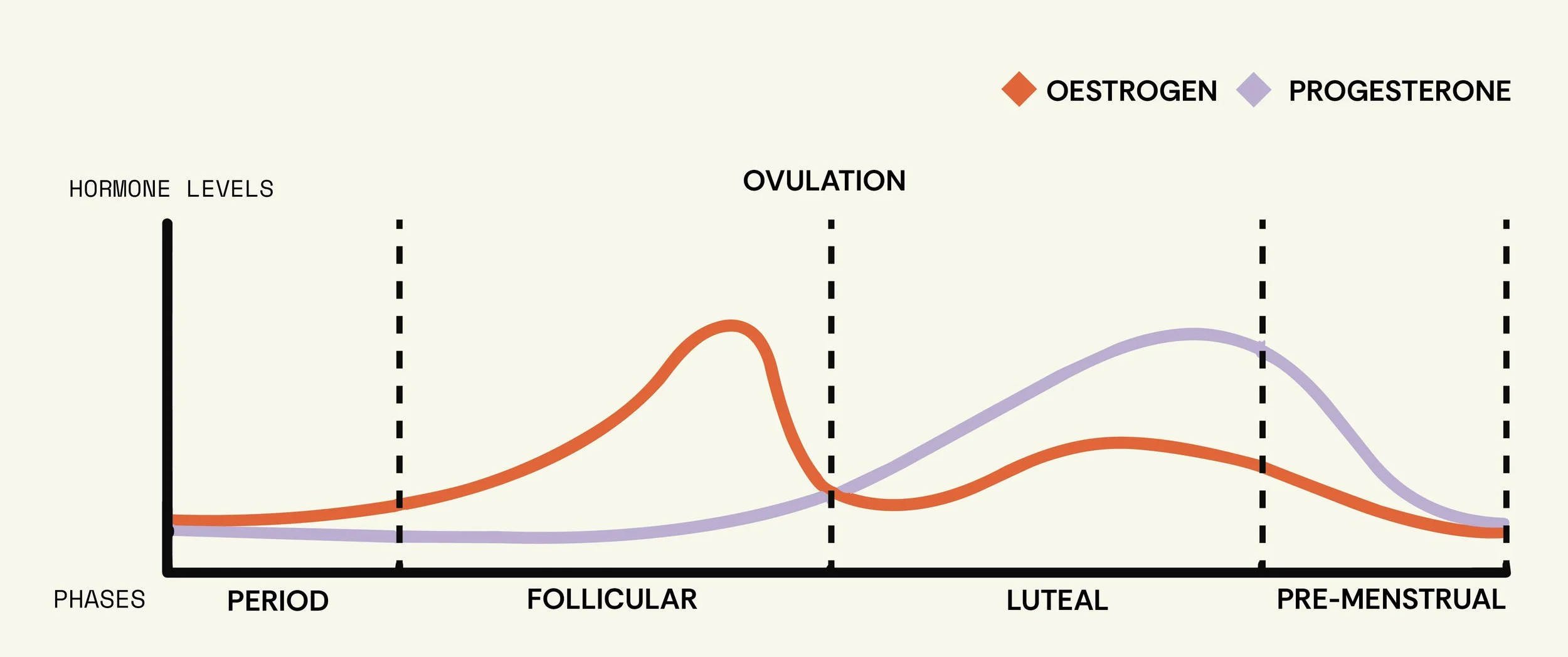
Hormone levels across the menstrual cycle. Estrogen rises through the follicular phase and peaks just before ovulation. After ovulation, progesterone becomes the dominant hormone through the luteal phase before both hormones drop toward menstruation — signalling the start of a new cycle.
The follicular phase runs from day one of your period through to ovulation — roughly days one to fourteen. This phase is driven by estrogen. As your period ends, estrogen begins to rise, signalling the body to develop and mature a follicle in preparation for ovulation. This gradual estrogen increase is what gives the follicular phase its characteristic upward energy. This is when many people notice sharper focus, more motivation, and a greater capacity for physical exertion during this time. The body is building, and estrogen is the primary driver of that process.
The luteal phase begins after ovulation and carries you through to the start of your next period — roughly days fifteen to twenty-eight. The ruptured follicle left behind after ovulation transforms into the corpus luteum, which begins producing progesterone. This is the defining hormone of the luteal phase. Progesterone prepares the uterine lining for potential implantation and has a calming, inward-pulling effect on the body and nervous system. Estrogen takes a secondary rise during this phase before both hormones drop toward the end of the cycle, triggering menstruation.
It’s important to keep in mind that every body is different, and cycle length varies. The principle is simply that your body has a rhythm, and that rhythm is worth paying attention to.
How seed cycling works
Seed cycling pairs specific seeds with each phase of your cycle. Each seed brings a distinct nutritional profile that aligns with what the body is doing during that phase.
Phase one — days one to fourteen Flax seeds and pumpkin seeds.
During the follicular phase, estrogen is naturally rising. Flax seeds are rich in lignans — plant compounds that support healthy estrogen metabolism and help the body process and clear estrogen efficiently. They also bring omega-3 fatty acids and soluble fibre, both of which support the anti-inflammatory environment the body needs during this phase.
Pumpkin seeds bring zinc, a mineral involved in the production of follicle-stimulating hormone (FSH) which supports follicle development ahead of ovulation. They also provide magnesium and iron to support energy and cellular health during a phase when the body is actively building.
Phase two — days fifteen to twenty-eight Sesame seeds and sunflower seeds.
After ovulation, progesterone becomes the dominant hormone. Sesame seeds bring lignans, calcium, and healthy fats that support the body's estrogen-progesterone balance during the luteal phase — when that ratio matters most.
Sunflower seeds are one of the best whole-food sources of vitamin E, an antioxidant that supports progesterone production and helps nourish the corpus luteum — the structure responsible for producing progesterone after ovulation. They also bring selenium and B6, a vitamin commonly associated with supporting mood and energy through the second half of the cycle.
Together, these four seeds provide targeted nutritional support for each phase — not by overriding your body's natural processes, but by giving it what it needs to move through them steadily. The general recommendation is one to two tablespoons of each seed per day, consumed consistently throughout the phase.
How to incorporate seed cycling into your routine
Seed cycling works best when it becomes a quiet, consistent habit rather than something you have to think about. Here are some simple ways to work your seeds into the day:
— Stir into yoghurt with fruit and honey
— Blend into a morning smoothie
— Sprinkle over oatmeal or overnight oats
— Mix into energy balls or homemade granola
— Add to salad dressings or grain bowls
— Stir into nut butter and spread on toast
The goal is consistency over perfection. Missing a day isn't a problem because what matters is showing up for your body over the course of weeks and months, not optimizing every single meal.
What to expect
This is where we want to be honest with you.
Seed cycling is not a dramatic intervention. You are unlikely to notice a significant change in the first week or even the first cycle. This is a slow, foundational practice. One that supports the body gradually and cumulatively. Some people notice shifts in energy, digestion, or how they feel through their cycle after two to three months of consistent practice. Others take longer.
If you're looking for a quick fix, seed cycling isn't it. If you're looking for a simple, sustainable habit that honours your body's natural rhythm, it's one of the best places to start.
A note from us
We created RISE and REST because we wanted to make seed cycling as simple as possible — pre-blended, phase-specific, and ready to add to whatever you're already eating. But you don't need our products to start. You can begin today with seeds from your local grocery store and a willingness to pay attention to your cycle.
That's the CENTRD philosophy in a nutshell. Not dependency on products or protocols. Just the right information, the right ingredients, and consistent support — so your body can do what it already knows how to do.
Where balance begins.